
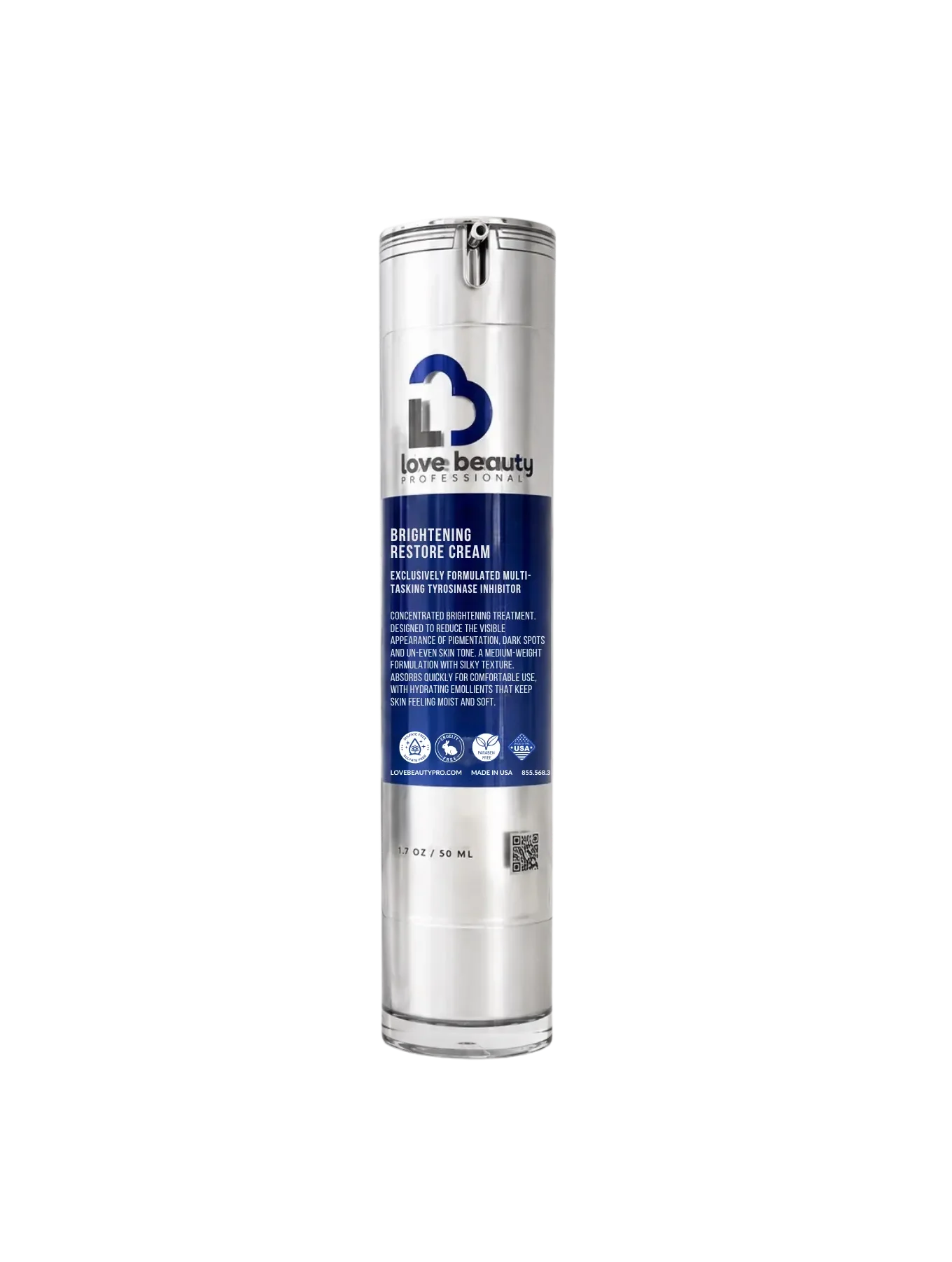

Reduces unwanted hyperpigmentation and restores a uniform, natural skin tone. It is also highly recommended as an essential product during pre-treatment prep before professional treatments.
Our formulation combines professional-strength ingredients and bioactive botanicals to treat all skin types (including sensitive skin).
Helps aid post-inflammatory hyperpigmentation (PIH), a common type of hyperpigmentation that occurs following skin inflammation or injury. This condition is characterized by the darkening of the skin in areas where inflammation or injury has occurred.
Primary Features
- Targeted brightening complex addresses localized discoloration while preserving skin softness
- Hydrating emollients provide moisture without heaviness
- Fragrance is minimized to reduce potential irritation while supporting daily wear
- Sun protection is highly recommended while using targeted brightening treatments to prevent new discoloration from forming
BENEFITS
- Assists in lightening Age Spots, Pregnancy Masks, Freckles, Sunspots, and Post Acne Marks
- Helps to even skin tone
- Lightens skin
- Essential for pre-treatment to inhibit melanin production
- HQ FREE
DIRECTIONS
- Apply every night or as directed by your skin care professional
- Daily wear of SPF 40+ sun protectant is highly recommended while using this product
- Avoid combining with strong exfoliants or retinols at the same time to reduce sensitivity
- Stop use if persistent irritation occurs and consult a skin professional for guidance
- Store in a cool, dry place away from direct sunlight
INGREDIENTS
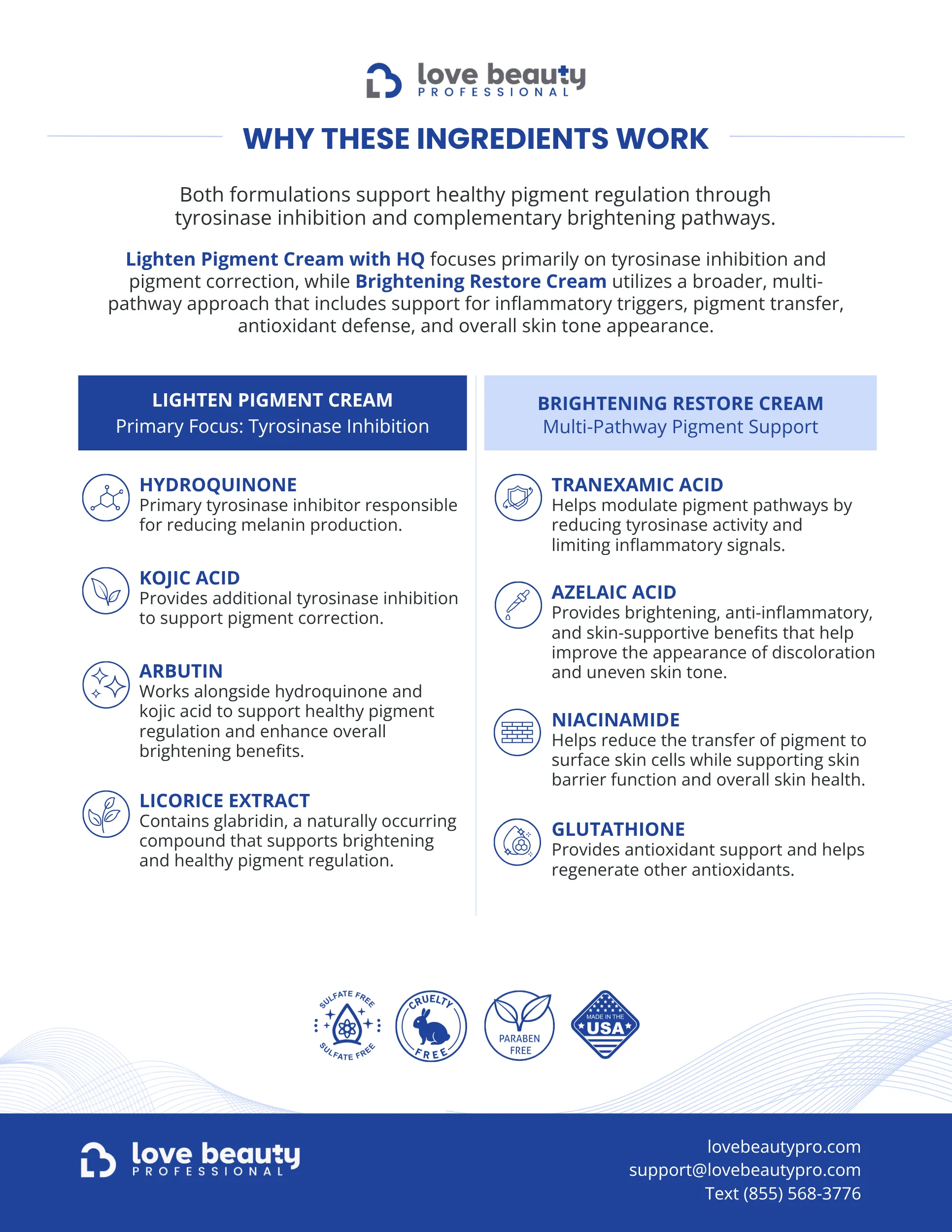
Exclusively formulated using a liposomal preparation combining powerful whitening ingredients with antioxidants for a strong brightening effect. Combining multiple ingredients and antioxidants together help stabilize oxygen, inhibiting both tyrosinase activity and activation of this enzyme.
Key Formulation Spotlight: Glutathione, Tranexamic Acid, Azelaic Acid, Niacinamide, Quercetin, Engelhardtia Chrysolepis Leaf Extract, Diacetyl Boldine, Palmitoyl Tripeptide-8, Niacinamide Vitamin B3 and Vitamin C.
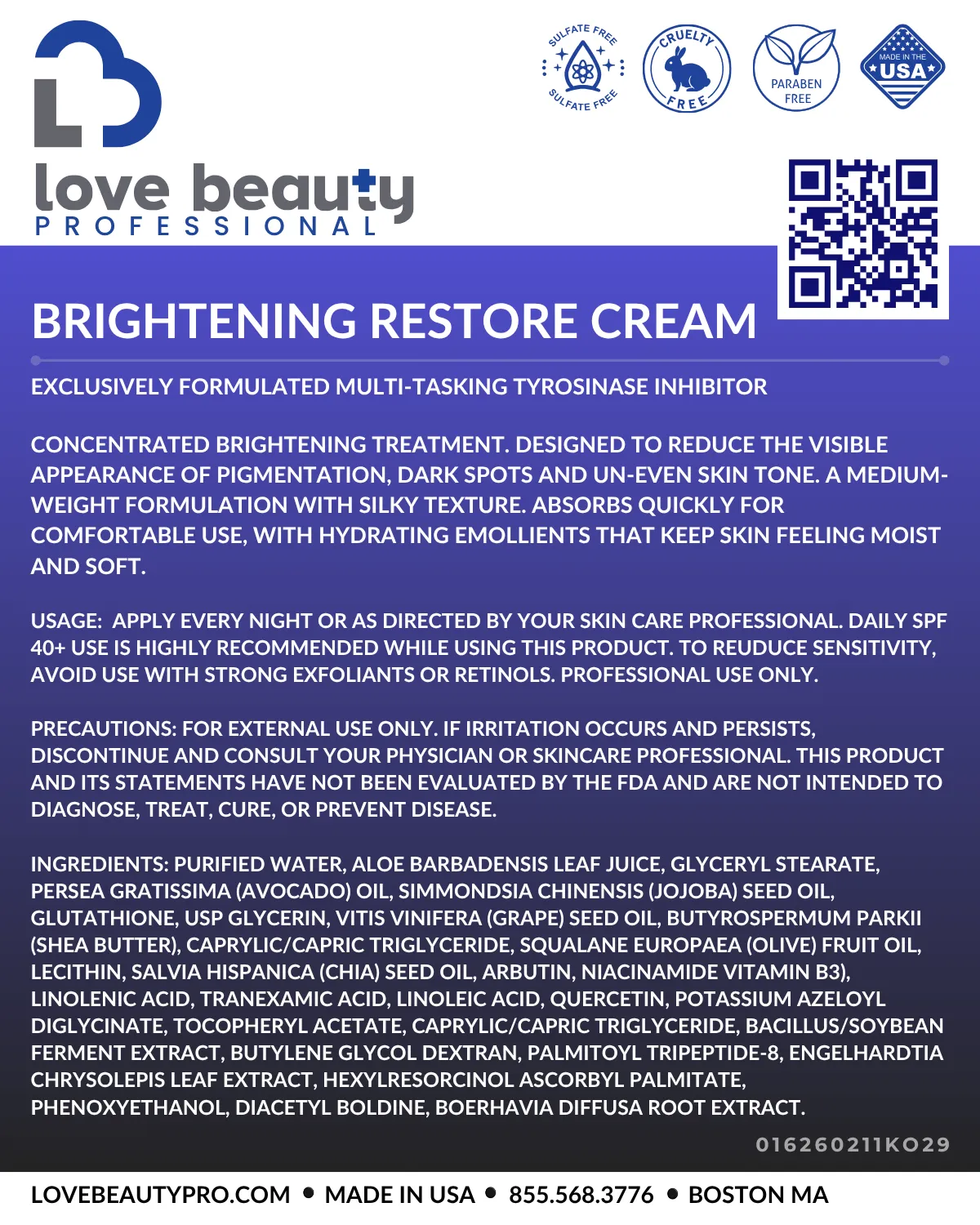
Full Ingredient List: Purified Water, Aloe Barbadensis Leaf Juice, Glyceryl Stearate, Persea Gratissima (Avocado) Oil, Simmondsia Chinensis (Jojoba) Seed Oil, Glutathione, USP Glycerin, Vitis Vinifera (Grape) Seed Oil, Butyrospermum Parkii (Shea Butter), Caprylic/Capric Triglyceride, Squalane Europaea (Olive) Fruit Oil, Lecithin, Salvia Hispanica (Chia) Seed Oil, Arbutin, Niacinamide Vitamin B3), Linolenic Acid, Tranexamic Acid, Linoleic Acid, Quercetin, Potassium Azeloyl Diglycinate, Tocopheryl Acetate, Caprylic/Capric Triglyceride, Bacillus/Soybean Ferment Extract, Butylene Glycol Dextran, Palmitoyl Tripeptide-8, Engelhardtia Chrysolepis Leaf Extract, Hexylresorcinol Ascorbyl Palmitate, Phenoxyethanol, Diacetyl Boldine, Boerhavia Diffusa Root Extract.
—————————————-
Hyperpigmentation can be a persistent issue influenced by various factors such as heat, hormonal changes, sun exposure, and aging. It often requires consistent and targeted skincare efforts to effectively address pigmentation concerns.
Before treating discoloration, the skin care professional must first determine how the skin is producing pigment. Not all pigment, age spots or dark spots are the same. Some pigment is simply stored on the surface, some is left behind after inflammation, and some is continuously recreated by internal signals such as heat or hormones.
WHAT IS HYPERPIGMENTATION?
Hyperpigmentation is a darkening of the skin that leaves some areas darker than others.
Hyperpigmentation can manifest in various forms and severity levels, ranging from light freckles to more pronounced discoloration like post-inflammatory hyperpigmentation (PIH), melasma, and uneven skin tone caused by photoaging or other factors.
Here’s how it typically happens:
- Inflammatory Response: When the skin experiences inflammation or injury, such as acne, cuts, burns, or other trauma, it triggers an inflammatory response. This response can lead to the production of excess melanin, the pigment responsible for skin color.
- Increased Melanin Production: Melanin is produced by melanocytes, specialized cells found in the skin’s epidermis. In response to inflammation or injury, melanocytes may become overactive and produce more melanin than usual. This excess melanin accumulates in the affected area, causing it to become darker in color.
- Appearance of Dark Spots: As a result of increased melanin production, dark spots or patches may develop on the skin. These areas of hyperpigmentation can range in size, shape, and intensity, depending on the severity of the inflammation or injury.
- Persistence of Hyperpigmentation: PIH can persist for weeks, months, or even years after the initial inflammatory event has resolved. In some cases, PIH may fade on its own over time, while in others, it may require treatment to improve its appearance.

Maha Bute, Medical Aesthetician
Tribeca MedSpa, New York, NY

Alli Glashower, Licensed Esthetician
Dermatology & Skin Cancer Center, Windermere, FL

Laura C. De Oliveira, PA-C
Reflections MedSpa at Dermatology Associates, Sarasota, FL

Ryan Nicolaidis, Medical Aesthetician
It’s A Secret MedSpa, Dallas, TX

Christina Wilhoite, Medical Aesthetician and Laser Technician
U.S. Dermatology Partners, Carrollton, TX